Drive-up vs. indoor units: which is right for you?
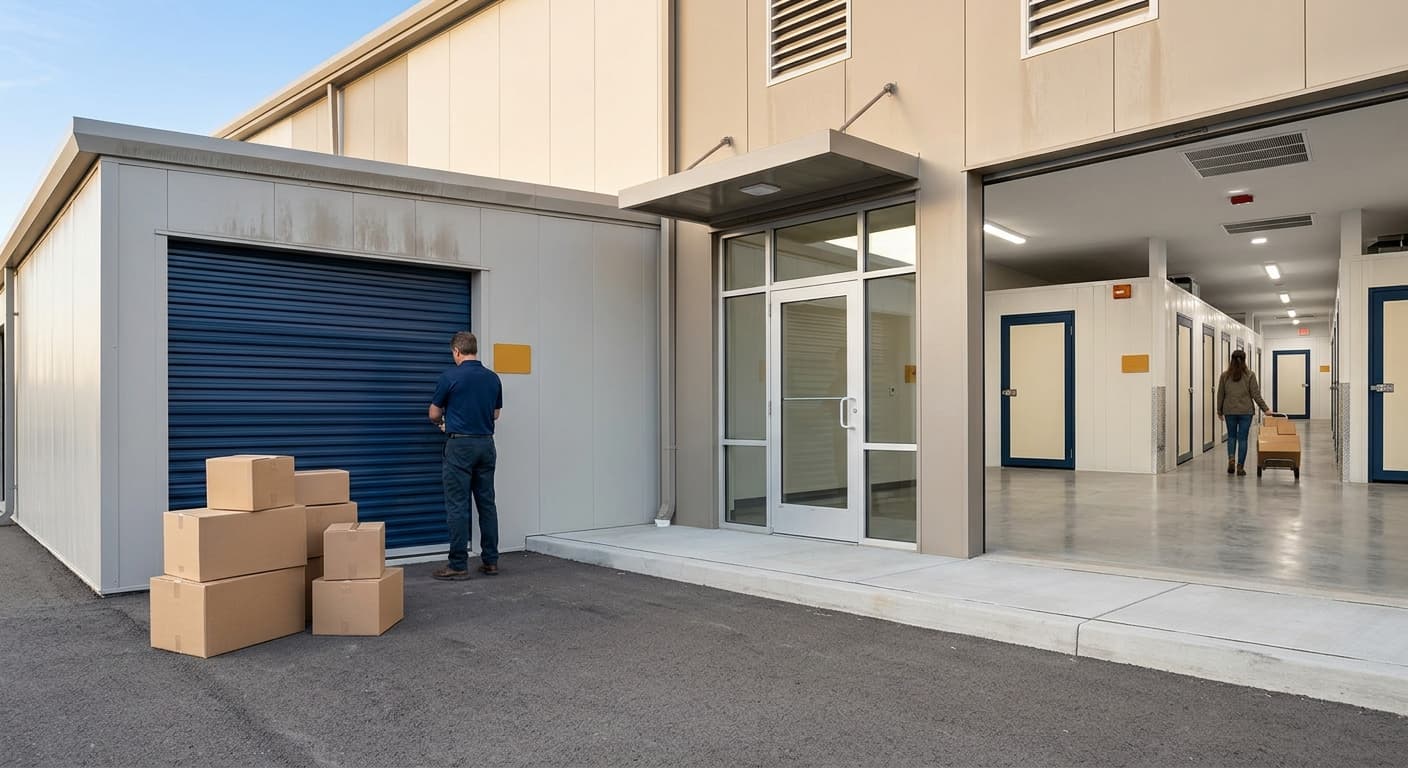
Most facilities offer both formats, and the right one depends less on price and more on what you're storing and how often you'll need to get to it.
Drive-up units
You park directly outside your unit and load straight in — no elevators, no hallways, no carts. That makes drive-up units the better choice for bulky or heavy items like furniture, appliances, or anything you're moving in and out frequently, like seasonal business inventory or contractor equipment.
Indoor units
Indoor units sit inside a building, accessed through a hallway or interior corridor. They're more sheltered from the elements — less wind, less direct sun, and typically better temperature stability than an outdoor drive-up bay, even without full climate control. They also tend to feel more secure, since access usually requires passing through a locked building entrance.
What tips the decision
If you're storing anything heavy that you'd struggle to cart down a hallway, or you'll be loading and unloading often, drive-up wins on convenience. If you're storing sensitive items for the long term and won't need frequent access, indoor is usually the safer, better-protected option.
Combine it with climate control if needed
Indoor units are sometimes climate-controlled and sometimes not — it's a separate feature, not a given. If temperature and humidity protection matters for what you're storing, confirm that specifically rather than assuming indoor covers it.
When you submit a request, tell us if drive-up access matters to you and we'll match you with facilities that offer it.
Start your search →